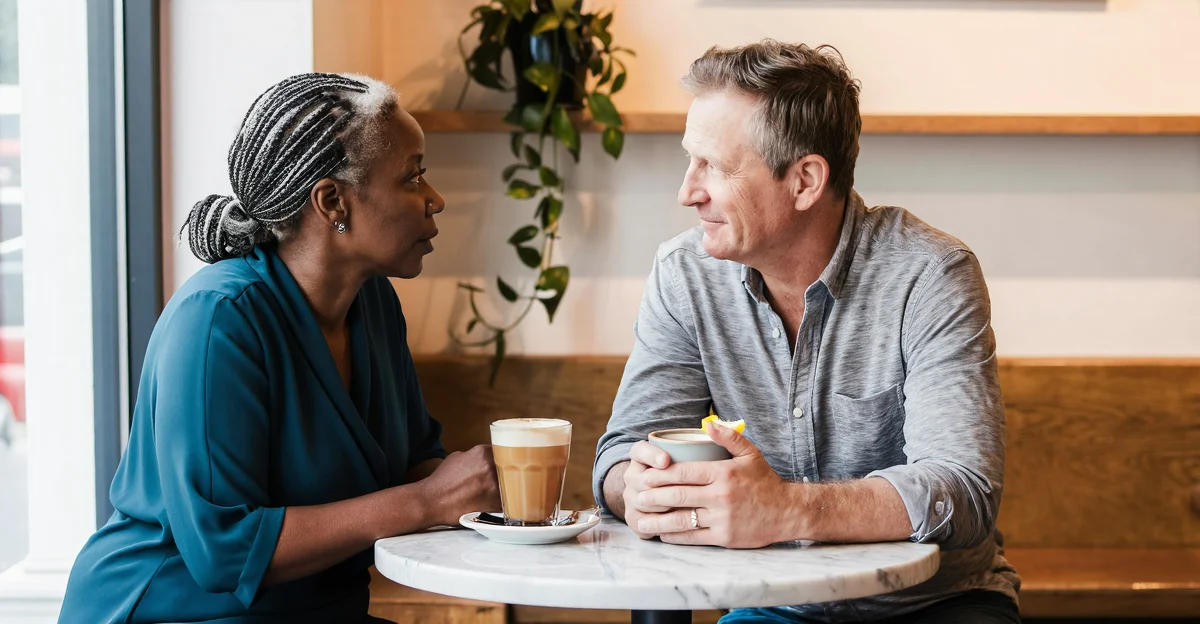
Over 50 dating is genuinely hard — not because you’ve lost something, but because every tool available to you was built by people half your age, for people half your age. The apps, the scripts, the advice articles: none of it was designed with your actual life in mind.
That gap is real, and it’s structural. No amount of optimism fixes a tool that was engineered for someone else. If dating has felt like trying to solve the wrong puzzle, that’s because it is. You’re not behind — you’re using equipment that wasn’t built for you, and there’s a meaningful difference.
And if part of what you’re carrying is “I’m terrified of rejection again at my age” — that’s not irrational. Rejection at 55 lands differently than rejection at 28. But the failure rate people my age experience on these apps isn’t mostly about fear. It’s mostly about the tool.
For a broader look at what this life stage actually requires, dating in your 50s covers the terrain this article expands on.
TL;DR
- Dating apps aren’t neutral tools — they’re built for 25-to-40-year-olds, and using them unchanged will make you feel like a failure when the problem is the tool, not you.
- Re-entering dating after divorce is a different experience than dating after a spouse’s death, and conflating the two leads to advice that fits neither situation well.
- The real obstacles to over-50 dating are structural — shrinking social circles, adult children, money entanglements, health changes — not mindset problems a pep talk can fix.
The Apps Feel Wrong Because They Were Built Without You
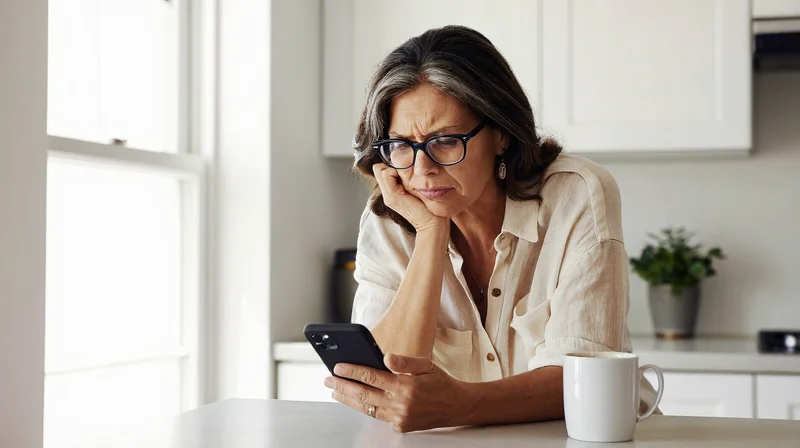
“These apps make me feel like a fossil” is something people my age say constantly, and the response they usually get is encouragement to persist. That response misses what’s actually happening.
According to 2023 Pew Research Center data on online dating usage by age, adults over 50 are the fastest-growing user segment on dating apps — and yet the apps themselves have barely changed to reflect this. Hinge’s prompts (“What’s your hot take?” / “My green flag is…”) were written by product teams in their late 20s for users who think in those registers. The photo conventions — recent, high-contrast, lifestyle-forward — implicitly penalize people who didn’t spend the last decade documenting their lives on Instagram.
The alienation you feel isn’t a confidence problem. The UX design, the algorithm, the prompt questions, and the photo culture were all optimized for a different user. That’s not a perception — it’s a product decision made without you in the room.
Consider what this means practically: the match rate algorithm rewards activity patterns that map onto younger users — fast responses, high swipe volume, frequent logins. People over 50 often approach the apps more deliberately, which the algorithm reads as low engagement and down-ranks accordingly. Your thoughtful approach to dating is being penalized by software that was trained on behavior it considers suboptimal.
This doesn’t mean apps are useless for people my age. It means the standard advice to “just download Hinge and see what happens” skips a step: you have to adapt the tool to your reality, not the reverse. Feeling out of place on these platforms isn’t evidence of personal failure — it’s an accurate read of a structural mismatch, and that distinction changes where you put your energy.
Widowed, Divorced, or Never Married — These Are Not the Same Starting Point
Most dating advice treats “starting over after 50” as a single category. It’s not.
If you lost your spouse to death, the primary obstacle most people describe isn’t loneliness or logistics — it’s guilt. The sense that dating again is a betrayal of the person you lost. That guilt has no real analog in the divorced experience. The question “when are you ready?” has entirely different emotional content depending on which situation you’re in.
Re-entering dating after a long marriage is its own adjustment — but it doesn’t come with the same grief freight.
Starting over after my divorce carries something different: “I don’t know who I am anymore after 25 years of marriage” is the version of lost identity that divorced people describe. Trying to date again after your divorce means building a self-concept that isn’t defined by the relationship that just ended. That’s real work, and it’s separate from grief.
Never-married singles over 50 face a third distinct experience — a social stigma that assumes something must be wrong with you, which is both unfair and exhausting to manage. AARP surveys consistently show this group reports the least validation from the advice ecosystem; the content either doesn’t address them or treats their situation as an anomaly rather than a normal life path. In practice, this stigma shows up on dates in a specific and predictable way: the question “how were you never married?” gets asked early and often, as if the answer will reveal some disqualifying flaw.
You don’t owe anyone an explanation for a life path that’s statistically common and morally neutral. A flat “it just didn’t happen” is a complete answer.
The practical takeaway:
- Widowed daters often need to distinguish between grief and guilt — they move on different timelines, and guilt tends to flare most intensely when things are going well with someone new, not when you’re still raw
- Divorced daters are frequently rebuilding an identity, not just a dating life — and what that requires is different from what any “finding love again” article addresses
- Never-married daters over 50 are dealing with external projections that have nothing to do with their actual lives; the most effective response to intrusive questions is calm brevity, not apology
Collapsing these into universal advice helps no one.
Over 50 Dating: How to Actually Use the Apps
The instinct to look younger in profile photos is understandable, and it almost always backfires. Photos that look like you’re trying to look younger produce suspicion — the person on the other side wonders why the photos feel off, even if they can’t name it. The better strategy is photos that communicate that you’re living well at your actual age: activity-based shots, natural light, no filters that smooth texture. The goal is to look like yourself, not like a younger version of yourself.
For bios, the conventions that read as charming at 28 — ironic self-deprecation, vague ambiguity about what you want — read as anxious or evasive at 55. You’ve been alive long enough to know what you want and what you don’t. A bio that signals that clearly is more attractive than one that tries to seem low-stakes.
“I just want companionship and someone to go to dinner with” is honest. It’s also specific, which is what actually attracts compatible people.
If you’re not looking to get married again, say that. It’s specific, it filters well, and it’s more honest than presenting a goal you don’t have. The range of what people my age actually want — companionship, something casual, a committed relationship without cohabitation — is wider than most dating profiles acknowledge. Being direct about where you fall on that range is a feature, not a liability.
On app selection: OurTime and SilverSingles were built for dating for over 50s — their prompt design, their matching logic, and their community expectations align with what people over 50 are actually looking for. Start there. Use mainstream apps like Bumble or Hinge as a second layer, adapted to your reality, not as the default. Check out our best dating apps for over 50 for a full breakdown of which platforms require the least translation.
What actually works on mainstream apps:
- Use 3-5 photos, all from the last 2 years, that show you in actual contexts (not just portraits)
- Skip prompts that feel designed for someone else — use the free-text sections where you can write in your own register
- Be direct about what you want in the first few messages — it saves everyone time and filters better than vague openers
The Real Obstacles Are Logistical, Not Emotional
“Put yourself out there” is advice that assumes going somewhere is easy. For people my age, it often isn’t — not because of attitude, but because of actual life.
You may be managing aging parents. You probably have a job that can’t be rescheduled around first dates without consequence. You might own a home in one city while the person you’re talking to owns a home in another, which makes long-distance relationships tips worth reading before you get attached — because the logistics of two established lives intersecting are genuinely more complicated than the logistics of two people in their 30s who rent apartments and have flexible schedules.
Financial entanglement with an ex is a real structural constraint that most advice ignores. If you and your ex still co-own the house and can’t resolve the sale for another two years, that’s not an emotional complication — it’s a structural constraint on when and how you can build anything new, and naming it as such changes the conversation. Shared assets, ongoing co-parenting costs, estate considerations: these aren’t feelings, they’re logistics, and they affect actual availability in ways that can’t be resolved by attitude.
The advice to join clubs and volunteer is fine as far as it goes, but it doesn’t account for the fact that people’s schedules are full for reasons. Social circles shrink after 50 not because of social failure but because the contexts that generated them — shared workplaces, children’s school activities, neighborhood proximity — have dissolved.
The solution is engineering, not attitude adjustment. If you’re managing aging parents, the engineering looks like this: block two evenings per week on the calendar as non-negotiable, treat them the way you’d treat a standing work commitment, and build dating into the structure rather than fitting it around everything else. That’s a different instruction than “make more time,” and it produces different outcomes.
What actually helps:
- Treat scheduling for dating the same way you’d treat scheduling for anything else important — it gets a slot, not a leftover
- For over-50 long-distance connections, have the relocation conversation early — not to pressure anyone, but because both people own homes and need to know if there’s any path forward
- If financial entanglement with an ex is affecting your availability, name that clearly rather than apologizing around it
Health, Intimacy, and the Conversations Nobody Wants to Have First
Most people over 50 have at least one health reality that will affect dating. A changed body after illness. Medication that affects libido. A chronic condition that shapes daily energy and scheduling.
The absence of these topics in mainstream dating advice sends an implicit message that these are disqualifying secrets rather than normal features of adult life at this stage.
Menopause affects physical intimacy in ways that are worth discussing with a new partner before they become confusing mid-relationship. The conversation doesn’t need to be clinical. Something like “my body’s changed in a few ways that are worth knowing about before we get physical — nothing alarming, but I’d rather name it than have it come as a surprise” opens the door without over-explaining. It also signals that you’re comfortable with your own reality, which most partners find reassuring rather than off-putting.
ED is common, treatable, and doesn’t need to be a source of shame — but it benefits from being addressed rather than avoided. The practical question people are actually asking is when to have these conversations, and almost nobody answers it. A straightforward approach works: “There’s something I want to mention before things go further — it doesn’t have to be a problem, but I’d rather you know than have it be unexpected.” The conversation is almost always less difficult than the anticipation of it.
In my experience, early disclosure of health realities that affect daily life produces better outcomes than waiting. Not on the first date — but before physical intimacy, and before significant emotional investment. It filters for people who can handle reality, which is exactly the filter you want. Concealing significant health information until after someone has fallen for you tends to produce the opposite of what you’re hoping for.
The AARP’s research on over 50 dating consistently shows that honesty about health is rated as one of the most important factors in relationship satisfaction for this age group — and yet the advice ecosystem treats this topic as if it belongs in a medical column rather than a dating article.
A few practical guidelines:
- Conditions that affect energy and scheduling (chronic pain, autoimmune conditions, recovery timelines) are worth mentioning before the first date; you can be brief
- Conditions that affect physical intimacy are worth discussing before the relationship becomes physical — not before, not after
- Lead with how you manage the condition, not just the diagnosis — it signals competence and self-knowledge
When Your Adult Children Are the Problem
Adult children’s disapproval of a parent’s new relationship is common, and the advice ecosystem has mostly handled it by validating the children’s feelings while leaving the person actually trying to date with no tools. Their feelings are real. And they’re not the only person in the picture.
Two triggers intensify disapproval most reliably: the speed of the new relationship (particularly after widowhood, where children may experience the new person as a replacement for the parent they lost) and the new partner’s financial relationship to the family estate or home. Acknowledging both triggers directly — rather than treating disapproval as irrational — makes for more productive conversations. If your adult child is upset because they’re afraid their inheritance is at risk, that’s a financial conversation, not purely an emotional one.
The distinction that matters most is between disapproval rooted in grief and disapproval that crosses into control. A child who says “I’m not ready for this” is expressing grief. A child who calls your new partner to tell them the relationship won’t work, or who says “if you keep seeing this person, I’m contesting the will,” is exercising control — and the response to those two situations is not the same.
The former requires patience and honest conversation. The latter requires firm limits. Our guide on dating someone with kids addresses the flip side: what to do when your partner’s children are the complicating factor.
Language that tends to work, used plainly:
- “I understand you’re not ready for this. I need you to know this isn’t a vote.”
- “I’m not asking for your approval. I am asking for you to be respectful.”
- “I know you’re worried about [specific concern]. Let’s talk about that directly.”
What typically doesn’t work: waiting for them to come around on their own timeline without naming the behavior you need to change.
Frequently asked questions
Which dating apps actually work for people over 50?
Apps built specifically for dating for over 50 — OurTime, SilverSingles, eHarmony — tend to produce less friction because their design assumptions align better with what people my age are actually looking for. Mainstream apps like Bumble and Hinge can work but require deliberate adaptation: different photo strategy, different bio register, adjusted expectations about match rates. The app isn’t failing you if it’s producing bad results — it may just need to be used differently than the default, or you may simply be using the wrong tool for your situation.
How soon is too soon to start dating after my spouse died?
There’s no universal timeline, and anyone who gives you a specific number is guessing. What’s worth paying attention to is managing grief and guilt simultaneously — because those two things operate on different schedules. If you find yourself feeling like a betrayal the moment a date goes well, that’s grief working on its own schedule, not a sign you moved too fast.
How do I handle it when my adult children disapprove of who I’m dating?
Distinguish between disapproval rooted in grief — which requires patience and honest conversation — and disapproval that involves controlling behavior around money, access, or your time. The first is painful but manageable. The second requires clear limits: name the specific behavior you need to change, not just the feeling you want them to have.
Is it worth being honest about health issues on a dating profile?
Early disclosure of health conditions that affect daily life consistently produces better outcomes than waiting. It filters for compatible people and signals confidence rather than concealment. You don’t need to lead with a diagnosis in your bio — but being clear that your schedule has constraints, or that you’re managing something chronic, saves everyone time and starts the relationship on honest footing.
Why do dating apps feel so exhausting and demoralizing after 50?
Because they were built by and for younger users, and the experience of dating over 50 on these platforms involves a real mismatch — not a perception problem. The prompts were written for a different demographic, the photo conventions evolved in a different social media context, and the algorithms were trained on activity patterns that most people my age don’t replicate. Feeling out of place on these platforms isn’t a confidence problem — it’s an accurate diagnostic response to a genuine structural mismatch.